
Sellers Are Cutting Prices To Meet Buyers Where They're AtYou're scrolling through listings on your phone and everything looks good until you see the price (or the estimated monthly payment). Then

Dated: May 5 2025
Views: 2

Saving up to buy a home can feel a little intimidating, especially right now. And for many first-time buyers, the idea that you have to put 20% down can feel like a major roadblock.
But that’s actually a common misconception. Here’s the truth.
Unless your specific loan type or lender requires it, odds are you won’t have to put 20% down. There are loan options out there designed to help first-time buyers like you get in the door with a much smaller down payment.
For example, FHA loans offer down payments as low as 3.5%, while VA and USDA loans have no down payment requirements for qualified applicants, like Veterans. So, while putting down more money does have its benefits, it’s not essential. As The Mortgage Reports says:
“. . . many homebuyers are able to secure a home with as little as 3% or even no down payment at all . . . the 20 percent down rule is really a myth.”
According to the National Association of Realtors (NAR), the median down payment is a lot lower for first-time homebuyers at just 9% (see chart below):
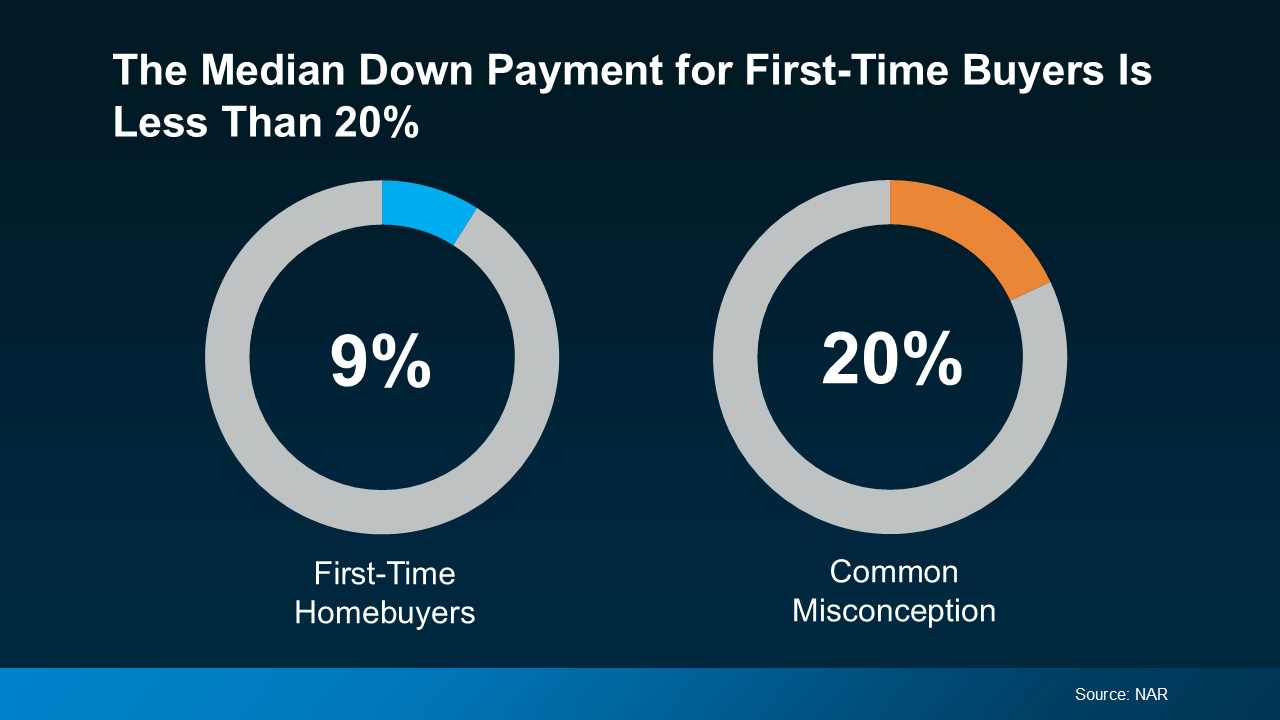 The takeaway? You may not need to save as much as you originally thought.
And the best part is, there are also a lot of programs out there designed to give your down payment savings a boost. And chances are, you’re not even aware they’re an option.
Believe it or not, almost 80% of first-time homebuyers qualify for down payment assistance (DPA), but only 13% actually use it (see chart below):
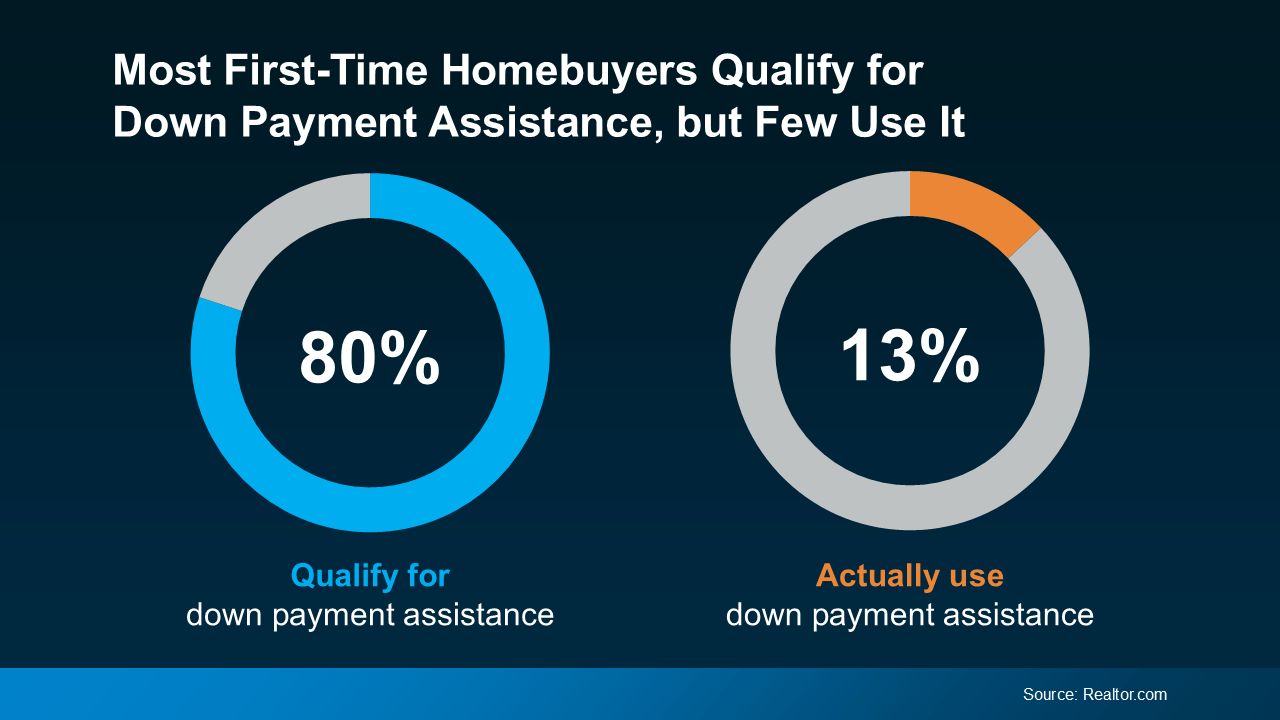 That’s a lot of missed opportunity. These programs aren’t small-scale help, either. Some offer thousands of dollars that can go directly toward your down payment. As Rob Chrane, Founder and CEO of Down Payment Resource, shares:
“Our data shows the average DPA benefit is roughly $17,000. That can be a nice jump-start for saving for a down payment and other costs of homeownership.”
Imagine how much further your homebuying savings would go if you were able to qualify for $17,000 worth of help. In some cases, you may even be able to stack multiple programs at once, giving what you’ve saved an even bigger lift. These are the type of benefits you don't want to leave on the table.
Saving up for your first home can feel like a lot, especially if you’re still thinking you have to put 20% down. The truth is that’s a common myth. Many loan options require much less, and there are even programs out there designed to boost your savings too.
To learn more about what’s available and if you’d qualify for any down payment assistance programs, talk to a trusted lender.
Let’s Connect
If you're thinking about buying your first home in Chester County—including Downingtown, Exton, West Chester, Honey Brook, Coatesville, or the surrounding areas—I'm here to help guide you through the process. Visit maura.goprofeswwsional.com or reach out today so we can connect you with trusted local lenders and explore your options together.

With 30+ years in the real estate industry, I've helped countless clients buy, sell and invest in homes. Each transaction is unique, with different needs, wants, timelines, and financial situations. T....
Sellers Are Cutting Prices To Meet Buyers Where They're AtYou're scrolling through listings on your phone and everything looks good until you see the price (or the estimated monthly payment). Then
Who Has the Upper Hand in Today's Housing Market?Ask around and almost every homebuyer out there wants to know if there’s a way to get a better deal. And just about every seller wants to know
The Case for Putting 20% Down on Your Next HomeIf you’re planning to buy your next home soon, you’ve probably heard the old rule about saving 20% for your down payment.The truth is, you
14 Years Running: Why Real Estate Is Still America’s Favorite InvestmentQuick gut reaction. Which investment do Americans trust more than stocks, gold, savings accounts, and bonds? The answer
 The data relating to real estate for sale on this website appears in part through the TREND Internet Data Exchange program, a voluntary cooperative exchange of
property listing data between licensed real estate brokerage firms in which The Move With Maura Team participates, and is provided by TREND through a licensing
agreement.
The data relating to real estate for sale on this website appears in part through the TREND Internet Data Exchange program, a voluntary cooperative exchange of
property listing data between licensed real estate brokerage firms in which The Move With Maura Team participates, and is provided by TREND through a licensing
agreement.
 © 2026 Florida Gulf Coast MLS (FGCMLS) Information deemed reliable, but not guaranteed. The IDX data relating to real estate for sale on this web site comes in part from the Florida Gulf Coast Multiple Listing Service. The information being provided is for consumers' personal, non-commercial use and may not be used for any purpose other than to identify prospective properties consumers may be interested in purchasing. Information is deemed reliable but not guaranteed.

The listing data displayed is deemed reliable but is not guaranteed accurate by CREA®. Data last updated on September 24, 2026 2:39 PM UTC The trademarks REALTOR®, REALTORS®; and the REALTOR® logo are controlled by The Canadian Real Estate Association (CREA®) and identify real estate professionals who are members of CREA®. Used under license. The trademarks MLS®, Multiple Listing Service® and the associated logos are owned by The Canadian Real Estate Association (CREA®) and identify the quality of services provided by real estate professionals who are members of CREA®. Used under license.
Show More...
 © BRIGHT, All Rights Reserved
Information Deemed Reliable But Not Guaranteed
The data relating to real estate for sale on this website appears in part through the BRIGHT Internet Data Exchange program, a voluntary cooperative exchange of
property listing data between licensed real estate brokerage firms in which
participates, and is provided by BRIGHT through a licensing agreement.
The information provided by this website is for the personal,
non-commercial use of consumers and may not be used for any purpose other than to identify prospective properties consumers may be interested in purchasing.
Data last updated: September 24, 2026 12:15 PM UTC
Some properties which appear for sale on this website may no longer be available
because they are under contract, have Closed or are no longer being offered for sale.
Some real estate firms do not participate in IDX and their listings do not appear on this website. Some properties listed with participating firms do not appear on this website at the request of the seller.
Show More...
 All information deemed reliable but not guaranteed. All properties are subject to prior sale, change or withdrawal. Neither listing broker(s) or information provider(s) shall be responsible for any typographical errors, misinformation, misprints and shall be held totally harmless. Listing(s) information is provided for consumer's personal, non-commercial use and may not be used for any purpose other than to identify prospective properties consumers may be interested in purchasing. The data relating
to real estate for sale on this website comes in part from the Internet Data Exchange program of the Multiple Listing Service. Real estate listings held by brokerage firms other than The Move With Maura Team may be marked with the Internet Data Exchange logo and detailed information about those properties will include the name of the listing broker(s) when required by the MLS. Copyright ©2026 All rights reserved.
Last Updated: September 24, 2026 2:24 PM UTC
Show More...
All information deemed reliable but not guaranteed. All properties are subject to prior sale, change or withdrawal. Neither listing broker(s) or information provider(s) shall be responsible for any typographical errors, misinformation, misprints and shall be held totally harmless. Listing(s) information is provided for consumer's personal, non-commercial use and may not be used for any purpose other than to identify prospective properties consumers may be interested in purchasing. The data relating
to real estate for sale on this website comes in part from the Internet Data Exchange program of the Multiple Listing Service. Real estate listings held by brokerage firms other than The Move With Maura Team may be marked with the Internet Data Exchange logo and detailed information about those properties will include the name of the listing broker(s) when required by the MLS. Copyright ©2026 All rights reserved.
Last Updated: September 24, 2026 2:24 PM UTC
Show More...
